Early Onset Scoliosis Resources, Support & Hope for Families
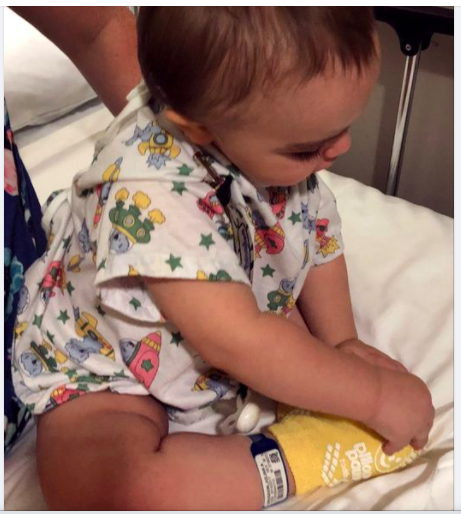
Parenting a child with scoliosis can feel overwhelming. You're not alone.
Early Onset Scoliosis Resources, Support, and Children's Books
Hi, I'm Leslie Brogdon, author of Gabe's Casts of Courage and founder of Little Warriors Press, where I help bring meaningful stories to life.
If you've recently received a scoliosis diagnosis, are preparing for Mehta casting, or are anxiously waiting for test results, I want you to know something:
You are not alone.
My son Julian was diagnosed with Early Onset Scoliosis (EOS) shortly before his first birthday. Like many families, scoliosis was not what we thought we were dealing with.
At first, we noticed something subtle. When Julian smiled, his head tilted slightly to one side. It wasn't dramatic. It didn't seem urgent. But over time, the tilt became more pronounced.
Doctors initially believed he had torticollis. We attended appointment after appointment. We went to physical therapy multiple times a week. When therapy wasn't helping, specialists became concerned. Botox was attempted. Additional testing followed.
As a parent, those months were terrifying.
Doctors discussed possibilities ranging from neurological conditions to cerebral palsy. Tests were ordered. Specialists became involved. Questions multiplied faster than answers.
Then, shortly before Julian turned one, everything changed.
A doctor accidentally ordered the wrong MRI.
That mistake led to the answer we had been searching for.
Julian had Early Onset Scoliosis.
At the time, I knew almost nothing about scoliosis in babies. What I learned next shocked me. Without treatment, severe Early Onset Scoliosis can affect lung development, compress internal organs, and significantly impact long-term health.
I had never heard of Mehta casting. I didn't know there was a community of families navigating the same journey. I had no idea how important early treatment could be.
Julian underwent a year of serial Mehta casting, receiving a new cast every six weeks. After casting, he spent a year in a brace full-time and another year wearing a brace at night.
Today, Julian is eight years old and thriving.
His curve reached zero degrees by age two. He runs, plays, learns, and lives the life every parent hopes their child can have.
What I wish I had known is this:
Early treatment matters.
This condition is rare. You may need to advocate. You may need to research. You may need a second opinion.
But you do not have to navigate it alone.
Some of the greatest gifts during our journey were the parents who had walked this road before us and shared their experiences, encouragement, and practical advice.
One parent told me that babies and toddlers don't know everyone else isn't going through the same thing. This is simply their normal. That perspective brought me tremendous comfort, and it proved true for Julian.
Children often handle this journey better than we do.
About Gabe's Casts of Courage
I wrote Gabe's Casts of Courage: A Tale of Bravery During Diagnosis because I couldn't find many children's books that helped explain scoliosis, casting, medical procedures, and the emotions that come with a diagnosis.
After spending years helping nonfiction authors tell meaningful stories, writing became my own way of processing our family's experience. I'd watched client after client use storytelling to make sense of difficult seasons, and creating this book felt like the most natural thing in the world.
Inspired by Julian's real journey with Early Onset Scoliosis, the story follows Gabe as he navigates doctor visits, medical testing, casting, and the uncertainty that often accompanies a diagnosis.
Through courage, family support, and resilience, Gabe discovers that bravery doesn't mean you're not afraid—it means moving forward even when you are.
The book is designed for:
• Children with scoliosis
• Families navigating a new diagnosis
• Pediatric hospitals and clinics
• Therapists and child life specialists
• Grandparents and caregivers
• Classrooms and school libraries
I've been pleasantly surprised to see children as old as fifth grade engage deeply with the story. Today, the book is used by families, schools, and disability resource libraries to help children understand medical challenges and discover that they are stronger than they think.
About Leslie
I'm a storyteller, advocate, and mom based in Atlanta, Georgia.
Beyond scoliosis advocacy and writing, I help organizations communicate meaningful stories that inspire action and connection. I'm currently working on additional writing projects focused on resilience, healing, and the experiences that shape us.
When I'm not writing, you'll likely find me exploring a new adventure, trying aerial yoga, paddleboarding, roller skating, or finding creative ways to bring people together.
My mission is simple:
To help people feel seen, understood, and a little braver than they thought they could be.
Whether you've arrived here because your child was recently diagnosed, you're preparing for Mehta casting, you're worried about anesthesia, or you're simply looking for hope, I'm glad you're here.
Frequently Asked Questions About Early Onset Scoliosis
What is Early Onset Scoliosis (EOS)?
Early Onset Scoliosis (EOS) is scoliosis diagnosed before the age of 10. Because young children are still growing rapidly, early treatment is often critical to help guide spinal growth and support healthy lung and organ development.
Can torticollis be a sign of scoliosis?
In our case, yes. Julian was initially diagnosed with torticollis after we noticed he tilted his head when he smiled. Physical therapy wasn't helping, and further testing eventually led to an Early Onset Scoliosis diagnosis. Every child is different, but persistent torticollis may warrant additional evaluation.
What is Mehta casting?
Mehta casting is a treatment used for some young children with Early Onset Scoliosis. While a child is under anesthesia, doctors gently position the spine and apply a specialized cast designed to guide growth and improve spinal alignment over time. New casts are typically applied every several weeks as the child grows.
How long does Mehta casting last?
Every child's treatment plan is different. Julian wore a series of Mehta casts for approximately one year, receiving a new cast every six weeks.
What happens after Mehta casting?
Some children transition to bracing after casting. After completing Mehta casting, Julian wore a brace full-time for one year and then at night for another year.
Is anesthesia safe for repeated casting?
This is one of the most common concerns parents have. Every family's situation is unique, and treatment decisions should always be discussed with your child's medical team. For us, the benefits of early treatment outweighed the risks, and Julian tolerated treatment very well.
Will my child be okay?
This is the question every parent asks.
While every scoliosis journey is different, early diagnosis and treatment can make an enormous difference. Today, Julian is eight years old, thriving, and has a curve measurement of zero degrees.
How do I explain scoliosis to my child?
Children often understand more than we expect. I wrote Gabe's Casts of Courage to help families start those conversations in an age-appropriate, encouraging way. The story helps children understand medical treatment while emphasizing courage, resilience, and hope.
Where can I find support?
One of the most valuable resources during our journey was connecting with other parents who had walked this road before us. Organizations such as Shriners Children's and the Early Onset Scoliosis community can provide support, education, and encouragement for families navigating a new diagnosis.